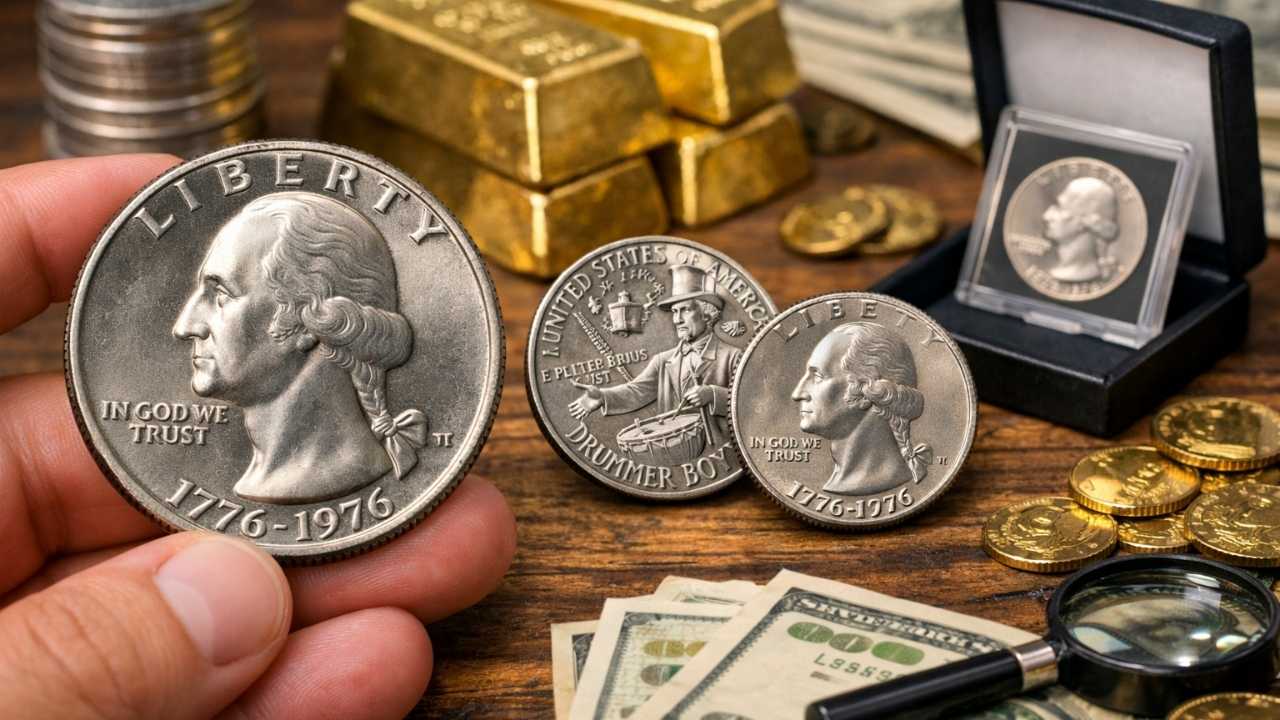
1976 Bicentennial Quarter Value Guide 2026: Coin collecting is an exciting hobby that blends history, art, and investment potential, and one coin that holds special significance for collectors is the 1976 Bicentennial Quarter. Produced to celebrate America’s 200th anniversary, the 1976 Bicentennial Quarter has become a popular choice for both new and seasoned numismatists. Though many of these quarters are still in circulation, some are worth much more than their face value due to their rarity, errors, and unique characteristics. As we approach 2026, certain 1976 Bicentennial Quarters are attracting the attention of collectors for their potential value. In this guide, we’ll explore four rare Bicentennial Quarters that are worth seeking out and offer insight into how these coins can add value to your collection.
History of the 1976 Bicentennial Quarter
The 1976 Bicentennial Quarter was issued as part of the U.S. Mint’s nationwide celebration of the United States’ 200th birthday. The coin featured a unique reverse design, depicting a Colonial drummer boy—a symbol of the American Revolution—along with the dates “1776-1976.” This reverse design was created by Jack Ahr, while the obverse retained the traditional portrait of George Washington, designed by John Flanagan.
In an effort to make the Bicentennial year special, the U.S. Mint issued a variety of special coins, including quarters, half dollars, and dollars, all featuring the Bicentennial design. The 1976 Bicentennial Quarter was produced in large quantities, with millions of coins struck at the Philadelphia, Denver, and San Francisco mints. Though most 1976 Bicentennial Quarters are relatively common and worth only face value, certain varieties—especially those with minting errors or unique features—are considered rare and valuable.
Rare 1976 Bicentennial Quarters to Look For in 2026
While the 1976 Bicentennial Quarter is often overlooked by casual collectors, there are certain rare versions that stand out and can be worth much more than the 25-cent face value. Below are four of the most valuable and rare 1976 Bicentennial Quarters that collectors should keep an eye out for in 2026:
| Coin Name | Year | Key Features | Estimated Value |
|---|---|---|---|
| 1976-S Proof Bicentennial Quarter | 1976 | Special proof coin with high quality strike | $10,000+ |
| 1976-D Bicentennial Quarter (Doubled Die) | 1976 | Minting error with doubled letters on the obverse | $5,000+ |
| 1976 No Mintmark Bicentennial Quarter | 1976 | Coin without mintmark, Philadelphia Mint issue | $3,000+ |
| 1976-S Silver Bicentennial Quarter | 1976 | Silver version of the Bicentennial Quarter | $1,500+ |
These are just a few of the rare 1976 Bicentennial Quarters that have gained significant value in the coin-collecting community. Many of these coins are valuable due to their low mintage, special minting processes, or unique errors. For instance, the 1976-S Proof Bicentennial Quarter is considered valuable due to its exceptional quality and the fact that it was struck as part of a special proof set, making it a prime target for collectors. Similarly, the 1976-D Bicentennial Quarter with the doubled die error is highly sought after for its minting mistake, which adds a unique characteristic to the coin.
Minting Errors and Features That Increase Value
Minting errors and unique characteristics are key factors that can make a 1976 Bicentennial Quarter more valuable. Understanding these features can help you identify rare coins that are worth far more than their face value. Some of the most significant errors and features to look for in the 1976 Bicentennial Quarters include:
- Doubled Die Errors: A doubled die error occurs when the die used to strike the coin is misaligned, causing part of the design to appear doubled. The 1976-D Bicentennial Quarter is famous for its doubled die error, particularly in the letters “LIBERTY” and “IN GOD WE TRUST” on the obverse. These errors are highly valued by collectors due to their rarity and distinct appearance.
- Proof Coins: Proof coins are specially struck coins designed for collectors, with higher quality strikes and sharper details. The 1976-S Proof Bicentennial Quarter is a prime example of a valuable proof coin. These coins were struck using polished dies and were only available in proof sets, making them much rarer than regular circulation coins.
- Silver Versions: The U.S. Mint also produced a limited number of 1976 Bicentennial Quarters in 40% silver. These coins were issued as part of the Bicentennial Silver Proof Set and are much more valuable than their copper-nickel counterparts. The 1976-S Silver Bicentennial Quarter is especially sought after by collectors due to its silver content and limited mintage.
- No Mintmark Quarters: While most 1976 Bicentennial Quarters carry a mintmark (“D” for Denver or “S” for San Francisco), some 1976 quarters were struck without a mintmark at the Philadelphia Mint. These no-mintmark coins are rarer than their mintmarked counterparts, particularly the 1976 quarter, which was struck without a mintmark in large quantities for the first time in U.S. history. These coins are highly sought after for their uniqueness.
How to Spot Rare 1976 Bicentennial Quarters
To ensure you’re collecting the right 1976 Bicentennial Quarters, you need to know how to identify the key features and errors that make these coins valuable. Here’s a guide on what to look for:
- Examine the Mintmark: The mintmark on a 1976 Bicentennial Quarter can be found on the obverse (front) of the coin, just beneath Washington’s neck. Coins struck at the Denver Mint will have a “D” mintmark, while coins struck at the San Francisco Mint will have an “S” mintmark. If you come across a 1976 Bicentennial Quarter without a mintmark, it could be the Philadelphia Mint issue, which is rare and valuable.
- Look for Doubling: On the 1976-D Bicentennial Quarter, the “LIBERTY” and “IN GOD WE TRUST” inscriptions are often doubled due to a minting error. The doubling effect is visible to the naked eye, and you should see clear, distinct doubling in the lettering. If you spot this, you may have found a valuable doubled die error coin.
- Check for Proof Quality: Proof coins have a distinct look due to their high-quality strikes. The 1976-S Proof Bicentennial Quarter, for example, will have sharp, mirror-like surfaces with detailed features. These coins are often available in special proof sets and are much shinier and clearer than regular circulation coins.
- Inspect the Edge for Silver Content: Silver versions of the 1976 Bicentennial Quarter were issued in limited quantities and are easily distinguishable from regular clad quarters. Use a magnet or examine the edge of the coin carefully—if it has a silver hue, it could be a 40% silver quarter, which is more valuable than a regular clad version.
- Condition of the Coin: As with any collectible, the condition of the coin plays a major role in its value. Quarters that are in mint or near-mint condition, free from scratches, dents, or discoloration, will generally fetch higher prices than those that have been heavily circulated.
Grading and Value of 1976 Bicentennial Quarters
Grading is an important part of determining the value of your 1976 Bicentennial Quarters. Coins are graded on a scale from 1 to 70, with higher grades indicating better condition. A coin in mint condition, such as a grade of MS-65 or higher, is worth more than a coin that is worn or damaged.
For example, a 1976-S Proof Bicentennial Quarter in mint condition can be worth thousands of dollars, while one that has been circulated and shows signs of wear will be valued much lower. Similarly, the 1976-D Bicentennial Quarter with a doubled die error will fetch a premium price if it is graded in high condition, particularly if it retains sharp details and minimal surface wear.
Professional grading services such as PCGS (Professional Coin Grading Service) and NGC (Numismatic Guaranty Corporation) provide standardized, objective evaluations of a coin’s condition. If you suspect you have a rare 1976 Bicentennial Quarter, getting it professionally graded is a great way to determine its true value.
The Investment Potential of 1976 Bicentennial Quarters
The 1976 Bicentennial Quarter may have been produced in large quantities, but certain rare versions have proven to be great investments over the years. As more collectors become aware of these valuable coins, the demand for them is expected to rise, further driving up their prices. Rare Bicentennial Quarters with errors, proof finishes, and silver content could see their value increase significantly over time, making them not only valuable collectibles but also potential investment opportunities.
However, as with any investment, it’s essential to do your research, stay informed about trends in the numismatic market, and seek expert advice before making significant purchases. The world of coin collecting is dynamic, and understanding the market is key to ensuring your investment pays off in the long term.
Final Thoughts
The 1976 Bicentennial Quarter remains one of the most iconic coins in U.S. history. While many of these quarters are still in circulation and worth only face value, certain rare versions are highly sought after by collectors for their unique features, minting errors, and historical significance. Whether you’re a seasoned numismatist or a beginner, focusing on the key dates, errors, and special features of the 1976 Bicentennial Quarter can lead you to valuable treasures. Keep an eye out for these rare coins, get them professionally graded, and you’ll be on your way to building a coin collection with both historical and financial value.