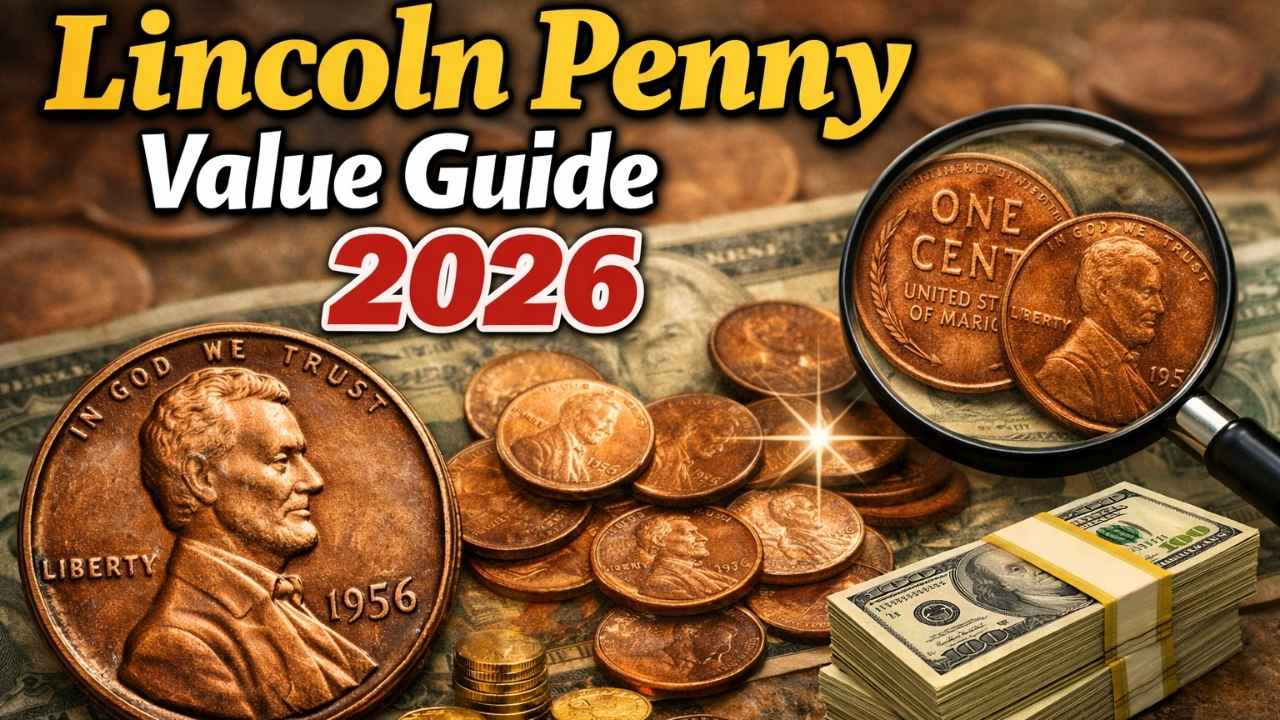
Lincoln Penny Value Guide 2026: Coin collecting is not just a hobby but a fascinating way to connect with history, and the Lincoln Penny is one of the most iconic and collectible coins in the United States. First introduced in 1909, the Lincoln Penny has undergone several design changes and continues to be a favorite among both new and seasoned collectors. Over the years, certain Lincoln Pennies have become highly sought after due to their rarity, unique characteristics, and historical significance. As we approach 2026, many collectors are closely watching the Lincoln Penny market, eager to discover key dates, mint marks, and other valuable insights. In this guide, we’ll take a deep dive into what makes Lincoln Pennies valuable, how to identify key coins, and how to make the most of your collection.
History of the Lincoln Penny
The Lincoln Penny was introduced in 1909 to commemorate the 100th anniversary of President Abraham Lincoln’s birth. Designed by sculptor Victor David Brenner, the coin features a portrait of Lincoln on the obverse and two wheat ears on the reverse, symbolizing America’s agricultural roots. This design remained in use until 1958 when it was replaced with the Lincoln Memorial reverse.
The coin was initially struck in 95% copper, but due to rising copper prices, it was switched to a copper-plated zinc composition in 1982. Over the years, the Lincoln Penny has undergone slight design changes, with the most recent change being the “Union Shield” reverse design introduced in 2010. Despite these changes, the Lincoln Penny has remained a staple in American currency and continues to be a favorite of collectors worldwide.
Key Dates for Lincoln Pennies
As with any coin series, certain dates are more valuable than others due to lower mintage numbers, historical significance, or unique characteristics. Here are some of the most important and valuable Lincoln Pennies to watch for in 2026:
| Date | Significance |
|---|---|
| 1909-S VDB | The 1909-S VDB is one of the most famous and valuable Lincoln Pennies. The “VDB” refers to the initials of the coin’s designer, Victor David Brenner, which were initially placed on the reverse of the coin before being removed due to public backlash. The 1909-S VDB is one of the first to feature these initials and is one of the most coveted coins in the series. |
| 1914-D | The 1914-D is another highly sought-after coin due to its rarity. With a low mintage, this penny is a favorite among collectors. Finding one in high-grade condition can command significant prices. |
| 1922 No D | The 1922 No D penny is one of the most famous minting errors in the Lincoln Penny series. The “D” mintmark was either weakly struck or missing altogether, making it a rare and highly valuable coin. |
| 1931-S | The 1931-S Lincoln Penny is another coin with a low mintage that has become a key date for collectors. While it’s not as rare as some of the other coins on this list, it’s still highly sought after, especially in higher grades. |
| 1955 Double Die | The 1955 Double Die penny is one of the most recognized minting errors in U.S. coinage. The doubling of the obverse design, particularly in the word “Liberty” and “In God We Trust,” makes this coin highly desirable. |
| 1970-S Small Date | The 1970-S Small Date penny is an important variety that is relatively rare compared to its large date counterpart. The small date version is valued by collectors due to its scarcity and distinctive design. |
While these dates are some of the most famous and valuable in the Lincoln Penny series, there are other key dates and varieties that are also worth noting. Always check your collection or pocket change to see if you have any of these valuable pennies!
Mint Marks and What They Mean
Mint marks are an essential part of understanding the value of any coin, and the Lincoln Penny is no exception. The mintmark indicates where the coin was struck, and some mint marks are rarer than others, which can impact the value of a coin. Here’s a breakdown of the different mint marks you’ll find on Lincoln Pennies:
| Mint Mark | Location | Significance |
|---|---|---|
| No Mintmark | Philadelphia Mint | Coins minted in Philadelphia did not have a mintmark until 1980. These coins are relatively common, though certain years may be more valuable based on mintage. |
| D | Denver Mint | Coins minted in Denver typically have a higher mintage than those from other mints, but certain years, like the 1914-D, are extremely valuable due to low production numbers. |
| S | San Francisco Mint | Coins minted in San Francisco are often rarer than those from other mints. The 1931-S and 1909-S VDB are prime examples of high-value coins from the San Francisco Mint. |
| W | West Point Mint (Special Editions) | The West Point Mint began producing pennies for special editions and proof coins in 1973. Coins from this mint are rarer but typically only valuable in specific series, such as proof sets. |
Coins minted at the Philadelphia Mint, for example, are more common, but specific years or minting errors can still make them highly valuable. Similarly, coins from the Denver and San Francisco Mints, which have lower production numbers for certain years, can command much higher prices.
Factors That Affect Lincoln Penny Value in 2026
The value of a Lincoln Penny in 2026 is determined by several key factors. While the year and mintmark are critical, there are other elements that will impact the price of a coin. Let’s explore the top factors that collectors should consider when determining the value of a Lincoln Penny:
| Factor | Description |
|---|---|
| Condition | The condition of the coin is one of the most important factors when determining its value. Coins in excellent condition with sharp details and little wear will be worth much more than those in poor or heavily worn condition. |
| Rarity | Pennies with lower mintages, like the 1909-S VDB or the 1922 No D, are naturally rarer and more valuable. Coins with significant errors or unique characteristics also tend to fetch higher prices. |
| Minting Errors | Minting errors such as doubled dies, missing mintmarks, or off-center strikes can make a coin highly valuable. These errors are often the result of mishaps during the production process but can make a coin much more interesting and desirable to collectors. |
| Demand | As with any collectible, demand plays a large role in determining a coin’s value. If interest in Lincoln Pennies continues to rise or a particular coin becomes highly sought after, the value can increase significantly. |
| Market Trends | The broader market for coin collecting can affect the price of Lincoln Pennies. Economic factors, changes in collector preferences, or new discoveries can influence how much collectors are willing to pay for rare coins. |
Understanding these factors can help you assess the value of a Lincoln Penny, whether you are buying, selling, or simply looking to expand your collection.
How to Spot Valuable Lincoln Pennies
To maximize the value of your Lincoln Penny collection, it’s crucial to know how to identify valuable coins. Here are some tips on spotting valuable Lincoln Pennies:
- Examine the Date and Mintmark: Always check the date and mintmark on the reverse side of the coin. Certain dates and mintmarks, such as the 1909-S VDB or 1914-D, are key to determining value.
- Look for Minting Errors: Carefully examine the coin for any minting errors, such as doubled dies or missing mintmarks. These errors can drastically increase the value of the coin, especially if they are clearly visible.
- Check the Condition: The condition of the coin plays a huge role in determining its value. Coins in near-mint or mint condition are worth significantly more than those that are worn or damaged. Use a magnifying glass to inspect the coin for any signs of wear, scratches, or damage.
- Seek Professional Grading: Having your coin professionally graded by services like PCGS or NGC is the best way to determine its true value. Coins that are graded higher in terms of quality and preservation will command higher prices in the marketplace.
- Keep Records: If you’re collecting for investment purposes, it’s a good idea to keep a record of your collection, including the grades, dates, and mintmarks of your coins. This will help you track their value over time and make informed decisions when buying or selling.
Tips for Collecting Lincoln Pennies
If you’re starting or expanding your Lincoln Penny collection, here are some useful tips to make the most of your hobby:
- Handle Coins Carefully: Always use gloves when handling coins to avoid transferring oils or dirt from your fingers, which can damage the surface.
- Store Properly: Use protective holders, such as 2×2 holders or capsules, to store your coins and keep them safe from scratches, dirt, and moisture.
- Learn About Coin Grading: Understanding the grading system for coins is essential for any collector. The higher the grade, the more valuable the coin is likely to be.
- Stay Informed: Keep up with the latest news in the numismatic world. Follow auctions, read collector magazines, and stay updated on trends to ensure you’re always informed about the value of your collection.
- Network with Other Collectors: Join online forums, attend coin shows, and connect with other collectors to share insights, knowledge, and opportunities for acquiring rare coins.
Conclusion
The Lincoln Penny is more than just a piece of currency; it’s a window into American history, culture, and craftsmanship. By understanding the key dates, mint marks, and the factors that affect their value, collectors can make informed decisions and potentially discover rare and valuable pieces. Whether you’re a seasoned numismatist or just starting, Lincoln Pennies offer an exciting and rewarding collecting experience.