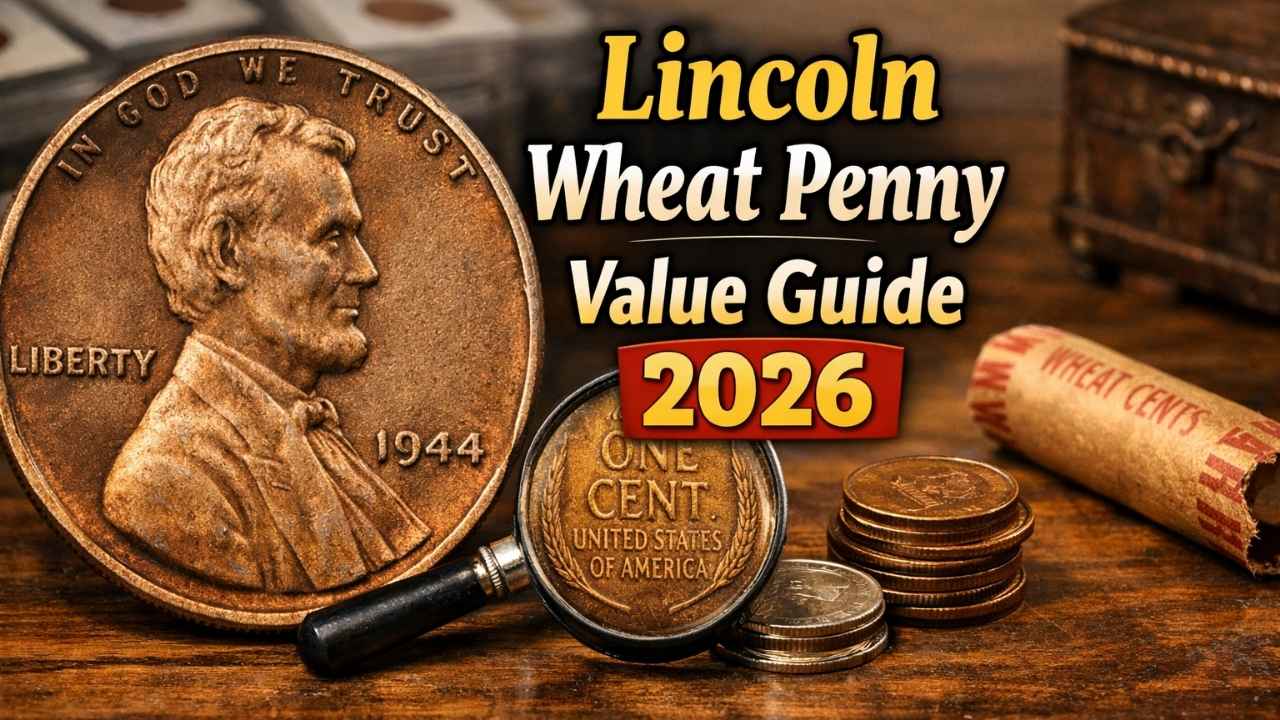
Lincoln Wheat Penny Value Guide 2026: Coin collecting is a fascinating pursuit that offers both historical value and potential financial gain. Among the most popular and iconic coins in U.S. history, the Lincoln Wheat Penny holds a special place. First introduced in 1909, this humble one-cent coin features the likeness of President Abraham Lincoln on the obverse, with the reverse initially depicting two ears of wheat, symbolizing America’s agricultural heritage. Although the Lincoln Wheat Penny is widely circulated, certain rare errors and high-quality specimens can be worth extraordinary amounts of money. In 2026, these pennies are still making waves in the numismatic community, with some coins fetching prices upwards of $586,000. Let’s explore the fascinating world of Lincoln Wheat Penny values and how collectors can spot the rarest and most valuable examples.
History of the Lincoln Wheat Penny
The Lincoln Wheat Penny was first issued in 1909 to commemorate the 100th anniversary of President Abraham Lincoln’s birth. Designed by Victor David Brenner, the coin features an image of Lincoln on the obverse and two wheat ears on the reverse. This design remained in use until 1958 when it was replaced with the Lincoln Memorial reverse. The coin was struck in 95% copper for most of its history, but after 1982, the U.S. Mint switched to a copper-plated zinc composition due to rising copper prices.
The Lincoln Wheat Penny is a beloved piece of American coinage, especially for collectors who appreciate the history behind it. However, not all Lincoln Wheat Pennies are created equal. While the vast majority of these coins are worth only their face value, certain rare errors, unique varieties, and high-grade examples can fetch impressive sums at auction. The most valuable examples, including a coin that recently sold for $586,000, are worth far more than anyone could imagine when first minted.
The $586,000 Lincoln Wheat Penny
In 2026, a Lincoln Wheat Penny fetched an astonishing $586,000 at a major coin auction, setting a new record for the series. This particular penny was a 1943 copper version—a coin that should have been struck in steel due to wartime shortages of copper. The 1943 copper Lincoln Wheat Penny is one of the rarest and most famous error coins in U.S. history, with only a handful known to exist. This penny, in particular, was in exceptional condition, contributing to its record-breaking sale.

The 1943 copper penny was created when a small number of copper planchets from the previous year’s production were accidentally used to strike coins in 1943. These coins were quickly identified as errors and removed from circulation, making them exceedingly rare. The one that sold for $586,000 was graded in near-mint condition, which is a critical factor in determining its astronomical value. For collectors, finding a 1943 copper penny in excellent condition is like finding a rare treasure, and the market has responded with record-breaking prices for these pieces.
Factors That Contribute to Lincoln Wheat Penny Values in 2026
The value of Lincoln Wheat Pennies in 2026 is determined by several important factors. As with any collectible, rarity, condition, and unique features can make a coin exponentially more valuable. Here are the key factors that influence the value of a Lincoln Wheat Penny:
| Factor | Description |
|---|---|
| Rarity | Some Lincoln Wheat Pennies, such as the 1943 copper error or the 1909-S VDB, are extremely rare and can command high prices. |
| Condition | Coins in mint state, with minimal wear and sharp details, are significantly more valuable than those in poor or worn condition. |
| Minting Errors | Errors, such as doubled dies, off-center strikes, or planchet issues, make certain coins more valuable to collectors. |
| Historical Significance | The Lincoln Wheat Penny is deeply tied to U.S. history, particularly with its link to the Lincoln centennial and the wartime production changes in 1943. |
| Demand | Collectors and investors looking for rare, high-quality examples of Lincoln Wheat Pennies drive up the prices for valuable coins. |
Rare coins like the 1943 copper penny or the 1909-S VDB penny—one of the most coveted coins in the Lincoln Wheat series—are highly sought after due to their limited availability. These coins’ unique features, such as their exceptional rarity or notable minting errors, make them prized possessions for collectors, which contributes to their increasing value in the marketplace.
Rare Lincoln Wheat Penny Errors and Varieties
One of the reasons the Lincoln Wheat Penny continues to captivate collectors is the variety of errors and anomalies that occur during the minting process. These errors make certain pennies more desirable and valuable, and spotting them requires a keen eye and some experience. Here are some of the most valuable and famous errors in the Lincoln Wheat Penny series:
- 1943 Copper Wheat Penny: The 1943 copper penny is one of the most famous error coins in U.S. history. During World War II, the U.S. Mint switched to producing pennies out of steel to conserve copper. However, a small number of copper planchets from 1942 were mistakenly used in 1943, creating a rare and valuable error. Only a handful of these pennies are known to exist, making them worth hundreds of thousands of dollars.
- 1909-S VDB: The 1909-S VDB is one of the most famous and highly sought-after Lincoln Wheat Pennies. The “VDB” on the reverse refers to the designer’s initials—Victor David Brenner. In 1909, due to public outcry over the initials appearing too prominently on the coin, the Mint stopped minting the VDB version, making the 1909-S VDB penny extremely rare and valuable today.
- Doubled Die Errors: A doubled die error occurs when a coin is struck more than once, causing the design to appear doubled. This is a common and highly sought-after error in the Lincoln Wheat series, with some coins fetching premium prices depending on the severity of the doubling.
- Off-Center Strikes: Off-center errors occur when a coin is not properly aligned during the minting process. These coins often have a portion of the design missing, creating a unique and collectible feature that increases their value.
- Repunched Mintmarks: In some cases, the mintmark on a coin is struck multiple times, causing a repunched mintmark effect. These coins are highly collectible, especially when the mintmark error is clearly visible.
How to Spot Valuable Lincoln Wheat Pennies
If you’re hoping to find a valuable Lincoln Wheat Penny, it’s important to know what to look for. Here are some tips for spotting rare and valuable examples of this iconic coin:
- Check for Minting Errors: Look closely for errors like doubled dies, off-center strikes, or missing details. These errors can dramatically increase a coin’s value.
- Inspect the Condition: The condition of the coin is one of the most important factors in determining its value. A coin in excellent condition, with sharp details and minimal wear, is worth much more than one that is heavily circulated.
- Look for Key Dates: Certain years, like 1909, 1943, and 1955, are known to have produced more valuable coins. Be especially on the lookout for the 1909-S VDB or 1943 copper pennies, as these are the most coveted examples.
- Examine the Mintmark: Lincoln Wheat Pennies minted in San Francisco (marked with an “S”) are often more valuable than those minted in Philadelphia or Denver. Pay close attention to the mintmark on the reverse of the coin.
- Use a Magnifying Glass: To spot fine details, such as minting errors or damage, use a magnifying glass or jeweler’s loupe. This will help you closely inspect the design and identify any rare characteristics that might increase the value of the coin.
Tips for Collecting Lincoln Wheat Pennies
If you’re new to collecting Lincoln Wheat Pennies, here are some practical tips to help you get started and build a valuable collection:
- Handle Coins Carefully: Always handle coins gently to avoid scratches or other damage. Use gloves to prevent oils and fingerprints from contaminating the surface.
- Store Properly: Store your coins in protective holders, such as 2×2 holders, capsules, or albums designed specifically for coins. This will protect them from damage and help preserve their value.
- Learn to Grade Coins: Understanding coin grading is essential to assessing the value of your Lincoln Wheat Pennies. Coins in higher grades are generally worth more, so learning the difference between a coin in “fine” condition and one in “mint” condition will help you make more informed decisions.
- Focus on Key Dates and Varieties: Pay special attention to key dates, like the 1909-S VDB and 1943 copper penny, as well as known varieties and minting errors. These coins are more valuable and more likely to increase in value over time.
- Join a Community: Coin collecting can be even more enjoyable when you share it with others. Join online communities, attend coin shows, or connect with experienced collectors to share tips and learn more about Lincoln Wheat Pennies.
The Investment Potential of Lincoln Wheat Pennies
Rare Lincoln Wheat Pennies are not only valuable to collectors—they can also serve as solid investments. Coins like the 1943 copper penny and the 1909-S VDB have shown tremendous appreciation in value over time, and many experts predict that these coins will continue to increase in price as demand for rare and